
Free graphic designer: what it really costs
Looking for a free graphic designer is a reasonable move when you're starting out. Here's what free actually gets you, the exact moment it turns against you, and how to move forward when the budget is tight.
You typed "free graphic designer" into Google. I know why you're here, and I'm not going to lecture you. You're launching something, money is tight, and spending 3,000 € on a brand identity before you've signed your first client makes no sense.
So let's do this honestly. I'll tell you what's genuinely available for free, what it gets you, the exact moment it turns against you, and how to move forward if your budget really is limited. I'm a designer, so I have a stake in this — which is exactly why I'm not going to hand you an article that boils down to "hire a professional."
Free is real. Here's where.
Let's start with the good news, because it's genuine.
Canva and templates. For a business card, an Instagram post, a résumé, a deck: it's fine. Genuinely. Thousands of businesses run on this and need nothing else.
AI logo generators. Free or nearly, and they produce something in eight seconds. I spent a day testing them properly and published the results unfiltered in my honest test of AI-generated logos. Short version: it isn't bad, and it isn't enough.
Free stock libraries. Unsplash, Pexels. Free, legal, often excellent. The only flaw: your competitor is using the same photo.
Design students and schools. A graduation project is real work, free or close to it. In exchange: the calendar is academic, not commercial, and nobody guarantees the outcome.
The tools designers give away. I build some myself — topolines.app generates usable topographic maps for free, because I needed it and there's no reason to charge for it.
And now the part that matters: for a lot of projects, that's enough. If you're testing an idea this weekend, if you sell at a market on Saturdays, if you're not sure this business exists in six months — a clean Canva logo and two well-chosen colors is the right call. Using free isn't the mistake. Still using it when your business is no longer free — that's the mistake.
One clear exception: stay away from logo contests. Thirty people work, one gets paid. That's not free, it's unpaid labour dressed up as a game — and you walk away with a file made by someone who never spoke to you.
Free gives you a file. Not a brand.
Here's the distinction that explains everything else.
A generator gives you a file. A designer sells you decisions. The file is just the proof that the decisions were made.
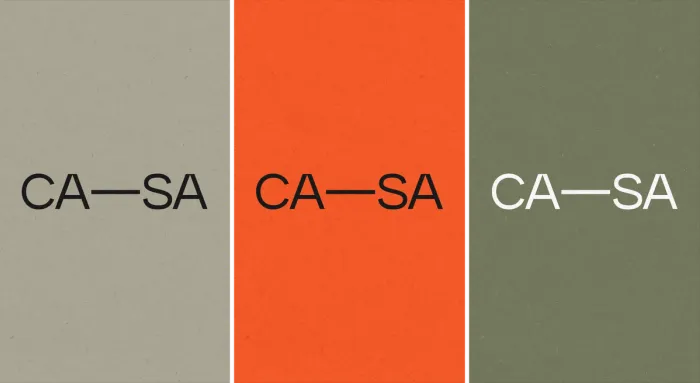
Look at the image above. That's the logo I designed for CA—SA, an architect. Three different grounds, one logo, no loss of legibility. That's not an aesthetic accident: it's a constraint decided upfront, because she prints plans, exhibits at trade shows, and posts on Instagram.
These are the questions a template can't ask you:
- Does your logo hold at 16 pixels in a browser tab?
- Does it survive engraving on metal, embroidery, single-colour printing?
- Does it look like your direct competitor's — the one your client was looking at right before you?
- Does your typeface say "reliable" or "cheap" to someone who has never heard of you?
A template can't answer any of that. Not because it's bad, but because it knows nothing about your trade, your clients, or where you want to be in three years.
What free actually costs
Free doesn't cost zero. It costs elsewhere, later, and usually more. Concretely:
You pay in time. Three evenings in Canva nudging a rectangle is three evenings you didn't spend selling. At your real hourly value, that's rarely a saving.
You pay in inconsistency. Logo from a generator, colors from a template, photos from Unsplash, type from your site theme. Each piece is fine on its own. Together they say nothing. Your client never puts it into words — they just feel it, and they hesitate.
You pay in perceived price. This is the heaviest line item, and the most invisible. An identity that says "I'm just starting out" makes every quote harder to defend. If your image costs you 10 % on an 8,000 € quote, your free logo just cost you 800 € on a single client.
You pay in redesign. At eighteen months you redo everything — except now you have printed cards, a website, an Instagram account with 2,000 followers, and a wrapped van. You're not paying for the identity anymore. You're paying to replace everything carrying it.
You pay in rights. A template logo is, by definition, used by other people. Trademarking it becomes shaky at best. It's the kind of detail whose importance you discover on the day it matters.
Step by step: what actually happens in a real project
"Graphic designer" suggests someone who draws. Drawing is maybe 20 % of the work. Here are the five steps, in order.
1. Understand before drawing
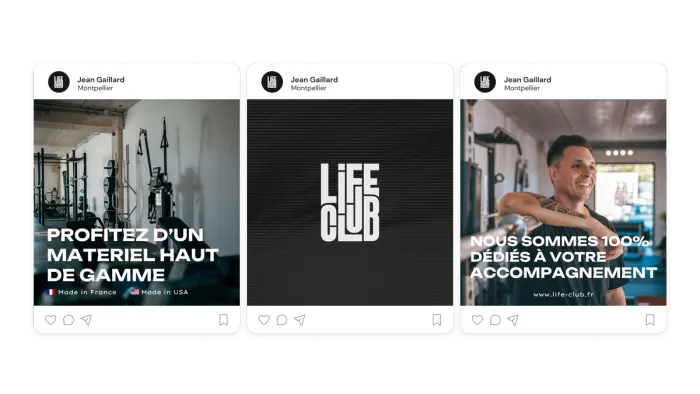
Who you sell to, against whom, at what price, and why anyone picks you. On Life Club, a gym, the real question was never "which logo." It was: how do we exist against chains that undercut on price, when we can't undercut on price? Everything else follows from that answer.
2. Decide, then write the decisions down
A color isn't "blue." It's a precise value, with tints, tested and documented — so that fifteen different people get the same blue, on screen and in print, without ever asking me.
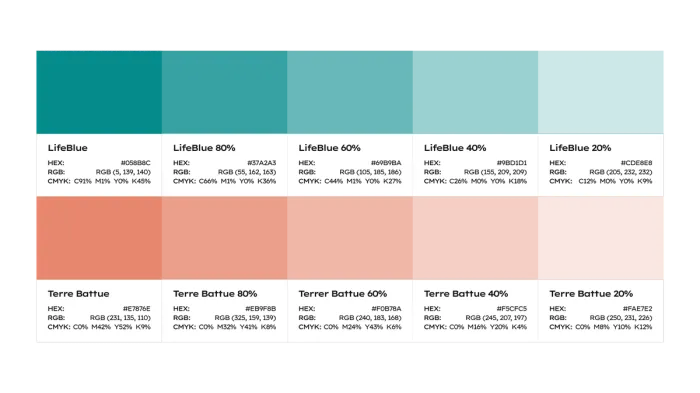
That document isn't decoration. It's the difference between a logo and a brand.
3. Test it where it hurts
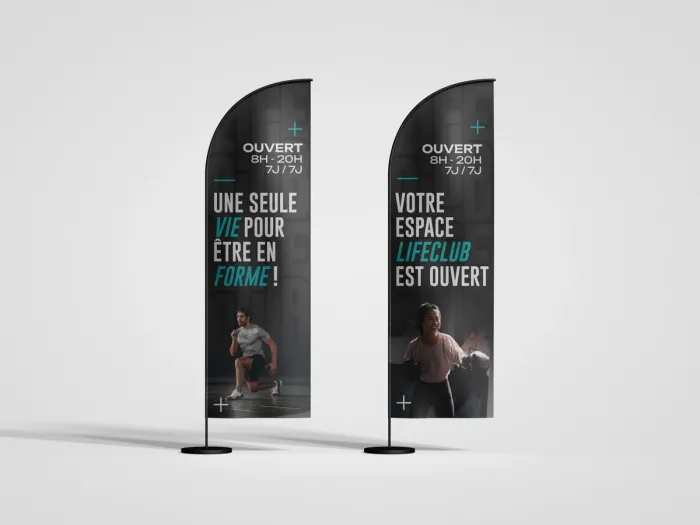
A logo always looks good on white in Figma. The real question is what it becomes at three metres, outdoors, in the rain, next to a competitor's sign.
4. Extend it into applications
A brand doesn't live in a logo. It lives in the thirty posts you'll publish this month, without me.
5. Hand it back to you
A good project doesn't end with a file delivery. It ends the moment you no longer need me for routine work. A designer who makes you dependent did the job badly.
The value is what happens afterwards
This is where the maths flips. A free identity gets consumed. A system compounds.
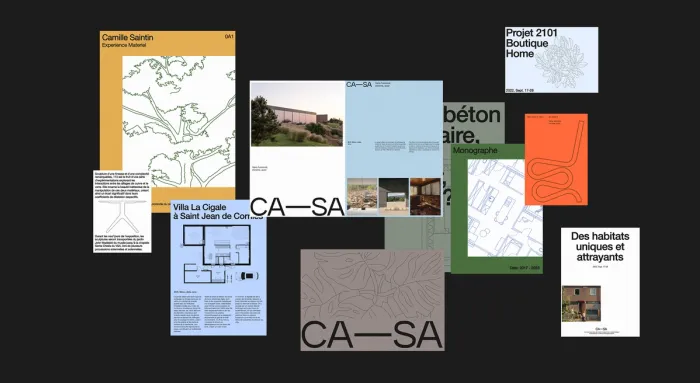
That image doesn't show ten creations. It shows one decision, applied ten times. In practice, that means:
- The next piece costs less than the last one, because the rules already exist.
- Your next contractor starts in an hour instead of a week, because there's a document to read.
- Your clients recognise you before they read you.
- You raise your prices without it feeling jarring.
An identity amortises over five to ten years. Per month, that's often less than your software subscriptions. The difference is that you pay it in one go — and that's what's frightening, not the actual amount.
If you want the mechanics, I wrote about what separates a brand identity from a design system: it's exactly this compounding logic.
Small budget? Here's how to do it anyway.
It isn't a wall. But it plays out on scope, not on quality.
Cut scope, never quality. Three flawless deliverables beat fifteen rushed ones. A solid logo, two colors, one typeface, properly decided — that carries you a long way.
Start with what's irreversible. Your name, your logo, your positioning. Those are the only things that are expensive to change later. The rest can wait.
Ask for a minimal system, not an 80-page book. Two pages that fix the rules will hold for three years.
Spread the payment. Plenty of freelancers, me included, will stage it. Ask — asking is free.
Be a good client. A clear brief, one decision-maker, batched feedback: you bring the quote down without negotiating a single line. Vagueness costs more than the work does.
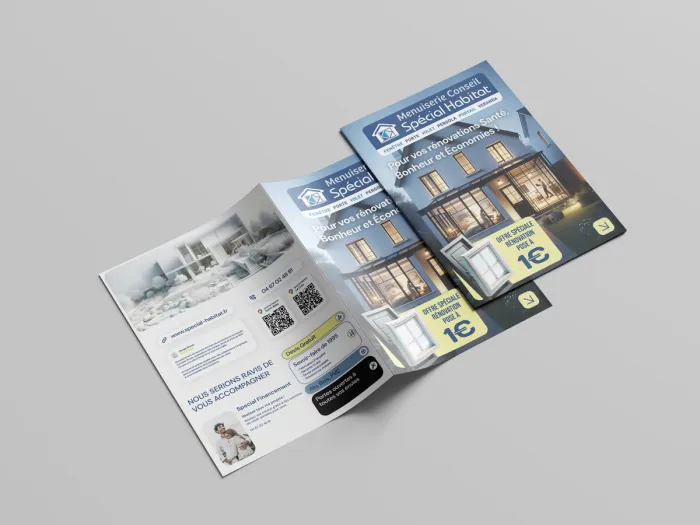
That project (Spécial Habitat) didn't have an agency budget. It had an honest scope and a client who knew what he was selling. That beats a big budget every time.
What I'd do in your position
If you don't have clients yet: stay free. Canva, a clean typeface, one color. Go sell. Come back later.
If the business is running, you have clients, and your image is starting to get in the way in front of them: this isn't a budget problem anymore, it's a timing problem. Every month you wait is one more month of material to replace later.
Free isn't a mistake. It's a stage. The mistake is letting it last longer than your business allows.
A tight budget isn't a problem. A vague scope is. Tell me where you are, I'll tell you what's actually necessary right now.
See my services