
Brand Mascots Are Back — and It's Not About Nostalgia
Duolingo killed its owl and gained 1.7 billion impressions. Apple accidentally created a mascot and broke the internet. Starbucks sold out a collectible bear. In 2026, brand characters are not a cute extra — they are the emotional infrastructure that logos can't provide.
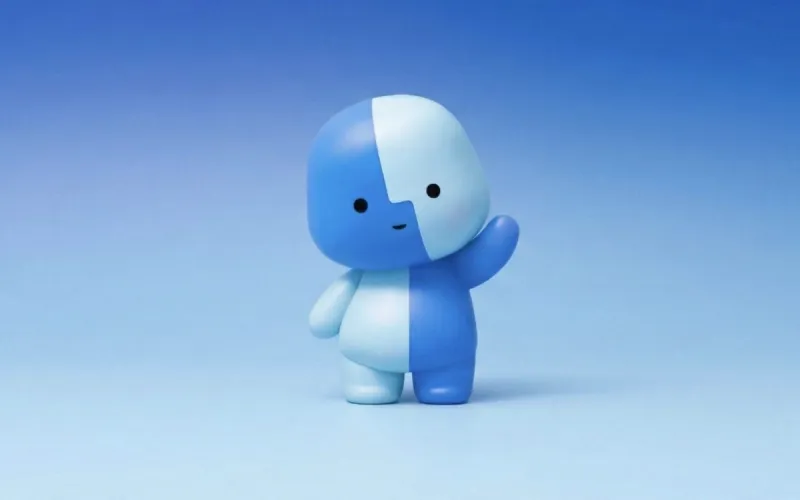
Something shifted in March 2026 that most brand strategy decks will not catch for another eighteen months.
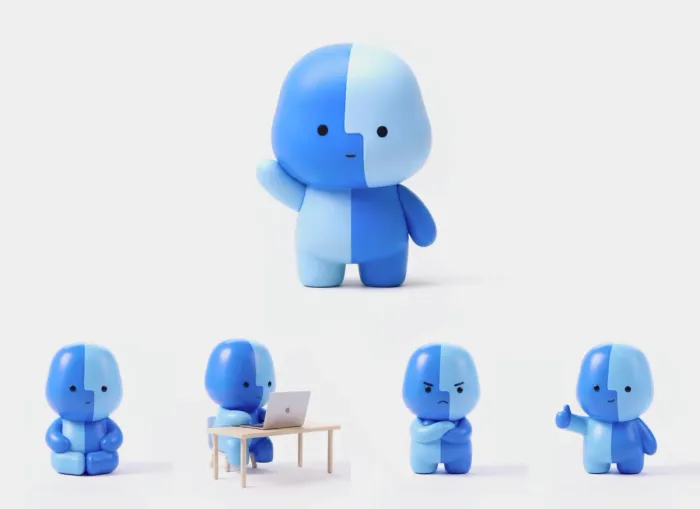
Apple — the most controlled brand on the planet — accidentally created a mascot. While promoting the MacBook Neo on TikTok, a tiny anthropomorphized version of the Mac Finder icon appeared in the corner of a livestream. Nobody planned it. Nobody sent a press release. The character sat at a miniature wooden desk, typing on a tiny laptop, sipping what looked like a matcha. The internet dubbed him Lil Finder Guy. Within 48 hours, a single screenshot had 1.2 million views. Fans were demanding plush toys, stickers, and official merchandise. A maker in the community published a file for 3D-printing him at home.
Apple — a company that controls every pixel of its public image — had done by accident what most brand strategies spend years and significant budget trying to do on purpose: made people genuinely care about a character.
This is not an isolated moment. It is a signal.
The data was already there

Duolingo has been proving this case for three years. In February 2025, the language-learning app staged the public "death" of Duo the Owl — struck by a Cybertruck in a choreographed viral stunt. No product push. No clear call to action. Just chaos, a mock funeral, and an internet that immediately started theorizing, mourning, and meme-ing.
The results were not ambiguous. Duo was mentioned 169,000 times online in two weeks. Conversation spiked 25,560% on announcement day. The campaign generated 1.7 billion impressions — twice the social conversation of that year's top Super Bowl ads. And the business results followed: a 41% increase in revenue, 47.7 million daily active users, a 40% year-over-year increase.
Duolingo grew from 40 million to 100 million users largely on the back of a green owl that threatens you about your language lessons. That owl now has more cultural weight than most brand logos in the edtech space combined.
The Starbucks Bearista, a limited-edition collectible bear released in early 2026, sold out in hours. Labubu — the blind-box collectible character from Pop Mart — became a global phenomenon with resale markets and waitlists, driven entirely by attachment to a character rather than utility. These are not toys. They are proof that humans will form deep loyalties to a figure they can project emotion onto, in ways they simply cannot with a wordmark.
Why now
The obvious answer is the AI saturation argument: when every brand can generate a flawless visual identity in four seconds, the thing that cannot be generated is a character people genuinely feel something about. That is true and worth taking seriously.
But there is a deeper reason. The era of minimalism trained consumers to strip brands down to their most legible essence — flat colors, geometric logos, clean sans-serifs. It worked because simplicity cut through visual noise. The problem is that it also stripped brands of personality. Most logos from the last decade could be swapped between companies without anyone noticing. They signal category membership, not character.
A mascot does something a logo structurally cannot. It creates a consistent emotional anchor — something with behaviors, expressions, moods, a point of view. Duo is not just the Duolingo logo with legs. Duo is passive-aggressive about your streak. Duo shows up at concerts uninvited. Duo died and came back. That narrative depth is what turns awareness into affection, and affection into loyalty.
Amanda Munilla of Wolff Olins, writing about the Lil Finder Guy moment, put it precisely: "Brand characters can become an ownable asset for emotional connection and a clearer path to building a trusted brand." The word ownable is doing important work there. You cannot own a geometric logo in a saturated category. You can own a character.
Apple's accident is actually a lesson
What is most instructive about the Lil Finder Guy moment is not that Apple created a mascot. It is that the mascot worked because Apple did not try.
The character emerged from a TikTok livestream. It was not the centrepiece of a campaign. It appeared in the corner of a video, doing its own thing, and the internet responded to it with the kind of genuine warmth that brands spend enormous budgets trying to manufacture.
The lesson is not "be sloppy." Apple's underlying design work — the Finder icon has existed since 1984, designed with the explicit idea that it represents both the user and the computer in relationship — meant there was already decades of meaning embedded in the mark. Lil Finder Guy did not create something new. He unlocked something that was already there.
That is the real mascot playbook: find the personality already latent in your brand, give it a form, and let it behave. The character should feel like a natural extension of what the brand already is, not a PR stunt grafted onto an identity that does not support it.
What this means if your brand is currently a clean logo
Most tech brands in 2026 are built around a clean mark, a sans-serif wordmark, and a well-constructed color system. That is a necessary foundation. It is not a sufficient one.
The brands that will build the deepest loyalty in the next five years are not going to be the ones with the most refined design systems. They are going to be the ones that give people something to care about — a voice, a perspective, a figure that accumulates meaning over time.
That does not require a mascot in the literal sense. It requires a brand that behaves consistently enough in the world that people can form a relationship with it. A mascot is one mechanism for doing that. A strong, specific tone of voice is another. An unmistakable visual language that shows up everywhere the same way is another.
But if you are currently relying on a clean logo and a pleasant color palette to carry your brand's emotional weight, the evidence from 2026 suggests that is increasingly insufficient. The market has learned to scroll past beautiful and anonymous. What stops the scroll is recognizable and alive.
Lil Finder Guy stopped it. A matcha-sipping tiny Mac character that nobody planned, nobody budgeted, and nobody managed — and yet he has more genuine fan affection than most intentional brand campaigns produced this year.
That gap between what gets planned and what gets remembered is where the next era of brand strategy lives.
A logo tells people what you do. A great brand makes them feel something. If yours isn't doing both, let's talk.
See my work