
Your Font Is Your First Impression — What Typography Says About Your Brand Before Anyone Reads a Word
Before your prospect reads a single word, your typeface has already told them whether to trust you. A Monotype neuroscience study proved it. Here's what your font is actually signaling — and what to do about it in 2026.
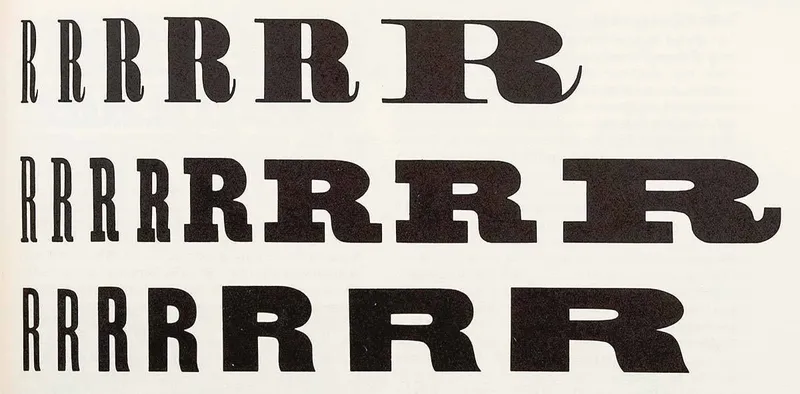
The decision happens before the reading
You land on a website. In the first 50 milliseconds, your brain has already decided something about the company behind it. Not from the copy — you haven't read that yet. Not from the logo — your eye is still scanning. From the type.
The weight of the letters. The curvature of the letterforms. The spacing between words. These micro-details trigger associations that are decades old, wired into us by every book, newspaper, signboard, and screen we've ever encountered. By the time you consciously read the headline, your gut has already made a call.
This is not an abstract design principle. Monotype, the world's largest type foundry, partnered with Neurons Inc. — a neuroscience research company — to measure it. They surveyed 400 participants and exposed them to the same words set in three different typefaces. The findings: the right typeface choice made a word appear 13% more relevant to its message, sparked a 10% increase in memorability, and brought a 9% increase in trustworthiness. Same word. Same message. Different font. Measurably different response.
Typography is a positioning tool — and most startups are ignoring it.
The Montserrat problem
Open twenty startup landing pages at random. Count how many use Inter, Montserrat, or Roboto. The number will be high. Usually over half.
These are excellent typefaces. They are clean, legible, free, and well-engineered for screens. Roboto powers much of the Android ecosystem. Inter was literally designed by a Figma employee for UI interfaces. Montserrat is beloved by designers for its geometric clarity and range of weights.
The problem is not quality. The problem is ubiquity.
When your typography is identical to your competitor's, you have removed one of the most powerful differentiation tools from the table. Your prospect's brain has already categorized you before they read your pitch. You look like a startup. Specifically, you look like every other startup. The font has done the work — just not the work you needed.
Montserrat's own design documentation puts it plainly: its popularity has made it one of the most overused typefaces on the web. For client projects where brand differentiation matters, it can be a liability. A restaurant menu, a law firm letterhead, a fintech app, and a children's birthday invitation can all look like they belong to the same visual family. None of them feels distinct.
This is the real risk. Not that your font looks bad. That it looks like nothing in particular.
What your typeface is actually signaling
Every major type category carries embedded cultural meaning. Serifs — the fonts with small horizontal strokes at the end of letterforms — have centuries of association with publishing, academia, luxury, and authority. Pick up any high-end fashion magazine, any broadsheet newspaper, any law firm website. The serif is doing load-bearing trust work.
Sans-serifs read as modern, clean, and efficient. Geometric sans-serifs like Futura signal precision and forward-thinking — think Volkswagen or Spotify's Circular typeface. Humanist sans-serifs, with their calligraphic roots, feel warmer and more human. FS Jack Regular, one of the fonts tested in the Monotype study, has a double-story "a" and "g" — small details that link it back to handwriting and prompted measurably stronger emotional responses from participants.
Script and display faces are reserved signals — they say something very specific, and they say it loudly. Use them when the personality is strong enough to back them up.
The Monotype research found real differences even between cultures. In France, a geometric sans-serif was judged more trustworthy for the word "quality." In the UK, the same word in a serif outperformed by a larger margin. Typography is culturally embedded. What reads as authoritative in one market can read as cold or dated in another.
Brands that understood this
Airbnb's Cereal typeface is the most cited example of typography as brand investment. The company commissioned it from Dalton Maag, the London-based type foundry, rather than licensing something existing. Cereal is a rounded, geometric sans-serif designed to feel warm and approachable — a visual articulation of the brand's mission to make strangers feel at home. Every word on the platform, across dozens of countries, carries that warmth. You cannot replicate it by setting your site in Poppins.
Stripe uses GT Walsheim — a geometric sans-serif with sharp structure and clean precision. That is not a random choice for a payments infrastructure company. The typeface signals exactness, technical reliability, and developer-grade seriousness, without the coldness of Helvetica.
In 2026, serifs are making a significant return in product brands. Lucas Luz, associate creative director at Monotype, put it directly: "Serif typefaces are making a comeback — not out of nostalgia, but out of necessity." As AI-generated content floods digital channels with perfectly smooth, soulless sans-serif layouts, serifs carry the opposite signal — craft, warmth, permanence, human intention.
Notion has begun integrating serif fonts into landing pages and campaign work. The signal reads as maturity. The brand is no longer a scrappy productivity tool. It is an established workspace.
What this means for your startup in 2026
You do not need a custom typeface. Airbnb and Stripe have nine-figure design budgets. You do not. But you do need to make a deliberate choice rather than a default one.
Start with the question your font needs to answer: what do we want someone to feel in the first three seconds? Not what they should think. What they should feel. Precise and credible? Warm and human? Rebellious and fresh? Grounded and premium? The emotional target drives the typographic decision.
Then ask whether your current font answers that question — or answers nothing. If someone could pick your font up and place it on a competitor's site without anyone noticing, you have a problem.
The practical move for most startups is not a full rebrand. It is one deliberate swap: trading a generic geometric sans-serif headline font for something with more personality. Space Grotesk over Montserrat for tech brands. A contemporary serif for the hero section of a company that wants to position as serious and considered. A typeface that belongs to you before it belongs to everyone else.
Typography is the cheapest way to communicate premium, trust, or category-defining ambition. Your logo might take months to redesign. Your font can change this week.
The next time someone lands on your site, they will make a snap judgment. The question is whether your typeface earns that judgment for you — or costs you it.
- ↳ Monotype Study Shows Typeface Choice Can Boost Positive Consumer Response by Up to 13%
- ↳ Breaking rules and bringing joy: top typography trends for 2026
- ↳ Top 3 Branding Design Trends to Watch in 2026: Texture, Typography & Earthy Colors
- ↳ The Importance of Typography in Branding: Stand Out in 2026
- ↳ Famous Brands That Invested in Custom Typography (and Why)
- ↳ These Will Be the Biggest Typography Trends of 2026
Your brand is making a first impression right now. Make sure it's the right one.
Let's talk about your identity